
 Arts & Culture
Introduction
Rome exists as a massive outdoor gallery where three thousand years of human expression are carved into stone and painted on plaster. Navigating this dense concentration of artistic masterpieces can easily overwhelm the unprepared traveler. This detailed manual solves that issue by serving as The Ultimate Guide to Rome’s Arts and Culture.
Exploring Classical Masterpieces of the Eternal City
The exploration starts with the giant ruins of the Roman Empire, which defined the architectural style of Western civilization. The Pantheon displays this incredible engineering skill, boasting the largest unreinforced concrete dome on earth. Built under Emperor Hadrian around 126 AD, the structure preserves a perfect interior sphere with a height and diameter of exactly 43.
3 meters.
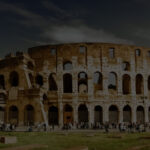
A short stroll leads to the Roman Forum and the Colosseum, illustrating the sheer size of ancient public spaces. The Colosseum, finished in 80 AD, hosted up to 50,000 spectators who filed through 80 numbered arches. Studying these ancient buildings provides the necessary background for The Ultimate Guide to Rome’s Arts and Culture.
The Spiritual Grandeur of Renaissance Art
The shift from antiquity to the Renaissance revived a deep interest in human form, physical accuracy, and visual depth. The Vatican Museums display a massive assembly of works from this period, stretching across seven kilometers of corridors. This huge storehouse of local heritage serves as a core part of The Ultimate Guide to Rome’s Arts and Culture.
Inside the Vatican walls, the Sistine Chapel shows the absolute height of High Renaissance painting. Michelangelo Buonarroti decorated the ceiling between 1508 and 1512, illustrating nine scenes from Genesis. The master painter returned decades later to complete The Last Judgment on the altar wall in 1541.
To get the most out of your visit to these sacred spaces, focus on these key artistic highlights.
- The Raphael Rooms, decorated between 1508 and 1524, which feature the legendary painting known as The School of Athens.
- The Laocoön and His Sons, an ancient Greek sculpture unearthed in Rome in 1506 that deeply inspired Michelangelo.
- The Belvedere Torso, a first-century BC marble remnant that served as the physical model for multiple figures on the chapel ceiling.
The Dramatic Expression of Baroque Rome
During the seventeenth century, Rome birthed the Baroque style, defined by stark shadows, raw emotion, and fluid motion. Gian Lorenzo Bernini altered the city with emotional sculptures that make hard marble look soft. Grasping this dramatic era is vital to mastering The Ultimate Guide to Rome’s Arts and Culture.
Galleria Borghese displays Bernini’s famous early creations, such as Apollo and Daphne, finished in 1625. The stone captures the exact second the nymph turns into a laurel tree, with fine leaves growing from her cold fingers. This incredible realism shows the physical skill of painters and sculptors of the period.
Caravaggio matched Bernini’s emotional force through the medium of paint. He relied on a method called chiaroscuro, creating sharp contrasts between brightness and deep shadow. Travelers can view these paintings for free in several local churches.
- The Church of San Luigi dei Francesi preserves three paintings honoring Saint Matthew, finished in 1600.
- The Basilica of Santa Maria del Popolo holds the Crucifixion of Saint Peter along with the Conversion on the Way to Damascus.
- The Church of Sant’Agostino displays the Madonna of Loreto, completed in 1604.
Modern and Contemporary Artistic Evolution
Rome is not just a protector of ancient history, but a living creator that keeps changing. The city welcomed twenty-first-century architecture when the MAXXI Museum opened in 2010.
Sketched by architect Zaha Hadid, the building features sweeping concrete curves and crossing black hallways. While ancient ruins define the local scenery, these new spaces form an important modern chapter in The Ultimate Guide to Rome’s Arts and Culture.
The National Gallery of Modern and Contemporary Art, set up in 1883, reveals a different side of the local aesthetic path. This museum holds more than 20,000 items, including work by Claude Monet, Vincent van Gogh, and Jackson Pollock. It shows how local creators connected with international movements during the last two centuries.
The Ultimate Guide to Rome’s Arts and Culture: Helpful Tips
Getting through the massive cultural landscape of Rome demands careful preparation and smart timing. Long queues and tight ticket rules can easily ruin a spontaneous vacation. Using these simple steps changes The Ultimate Guide to Rome’s Arts and Culture from a simple text into a real plan.
To make sure your trip goes smoothly, try following these simple steps.
- Reserve your Vatican Museum and Colosseum entry passes two months ahead of time to get the slots you want.
- Buy the Roma Pass to get free entry into your first two stops and ride public transport without limits.
- Walk into major churches early in the day to enjoy historic paintings without dealing with tourist crowds.
Synthesizing the Roman Cultural Experience
The creative history of Rome is a single thread linking ancient builders, Renaissance masters, and modern creators. By looking at specific eras one by one, you can avoid feeling tired and really enjoy the unique styles of each period. Using this organized method helps travelers get the most out of The Ultimate Guide to Rome’s Arts and Culture.
Map out your route by neighborhood to spend less time traveling and spend more time enjoying each historical era. Step away from the crowds and look inside neighborhood parish churches, which frequently house hidden masterworks. This balanced method guarantees a closer, personal tie to the artistic spirit of the city.


Comments are closed