



 New & Trending
Rome is undergoing a silent cultural revolution that extends far beyond its famous postcard landmarks. While the Colosseum and the Vatican continue to draw millions of global travelers, the city has quietly revealed spectacular archaeological wonders and modern cultural hubs over the past few years. For seasoned travelers and first-time visitors alike, identifying the top New Attractions to Visit in Rome offers an entirely different perspective on the Eternal City.
Uncovering Rome’s Best Newly Opened Sites
The Mausoleum of Augustus stands as a major victory for preservation in modern European history. This giant circular tomb opened to the public after remaining locked away for eighty years, offering a fresh window into imperial times.
A complete ten-million-euro restoration project changed this long-neglected ruin into a clean, protected archaeological site. Visitors can now go down into the central burial chamber where the ashes of the first emperor of Rome once rested.
The Domus Aurea, Nero’s infamous Golden House, has introduced an extraordinary underground sensory experience. A fresh entrance gallery designed by the award-winning architect Stefano Boeri provides elegant access to the subterranean chambers.
Visitors can now put on advanced virtual reality headsets to view the palace walls as they looked in 64 AD. This highly engaging archaeological wonder stands out among the essential New Attractions to Visit in Rome.
The Sacred Area of Largo di Torre Argentina finally opened its gates to pedestrian visitors. This historic square is famous as the spot where Julius Caesar was assassinated in 44 BC. It has quickly become one of the most popular New Attractions to Visit in Rome.
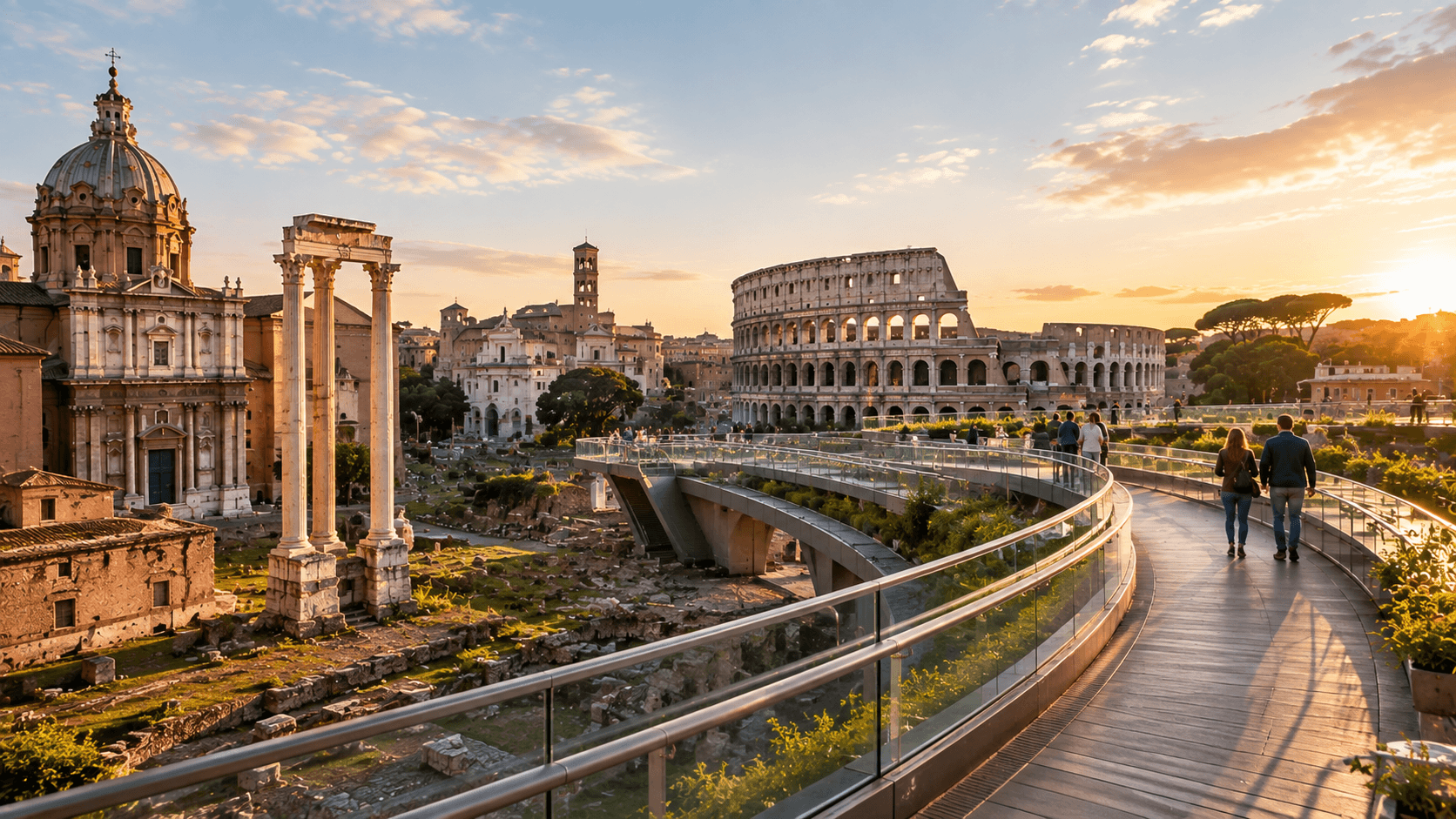
A series of newly built, fully accessible elevated walkways now lets travelers walk directly among the ancient temple ruins. The entire restoration project was funded by a generous one-million-euro donation from the Italian luxury fashion house Bulgari.
Modern Culture and Current Spaces
The Rome Planetarium and Astronomical Museum opened its doors again after an extensive eight-year modernization process. Located in the striking EUR district, the facility now features an advanced digital projection system.
The new technology casts ultra-high-definition images onto a massive fourteen-meter dome. Visitors can attend daily educational shows that explore the outer reaches of the solar system.
The National Museum of 21st Century Arts, known widely as MAXXI, has expanded its campus to include inventive green spaces. The museum now hosts temporary outdoor installations that merge architecture with ecological balance.
Travelers seeking modern culture will find that these New Attractions to Visit in Rome bridge the gap between antiquity and the present day. The city’s modern art scene is thriving in revitalized industrial neighborhoods.
- MAXXI Museum: Features bold modern architecture designed by the late Zaha Hadid.
- MACRO: Housed in a former Peroni brewery, offering experimental modern art exhibitions.
- Mattatoio: A converted 19th-century slaughterhouse in Testaccio that now hosts experimental performance art.
Summary of Premier Newly Opened Sites
To help you plan your travel schedule, here is a quick overview of these recent additions to the Roman cultural landscape.
| Attraction Name | Type of Site | Key Highlight |
|---|---|---|
| Mausoleum of Augustus | Imperial Tomb | Restored central burial chamber of Rome’s first emperor |
| Domus Aurea (Nero’s Golden House) | Underground Palace | Virtual reality tour of the ancient palace walls |
| Largo di Torre Argentina | Archaeological Square | Accessible walkways through the site of Caesar’s assassination |
| Colosseum Hypogeum | Subterranean Tunnels | Wooden walkway through the gladiator staging areas |
Lesser-Known Wonders and Revitalized Landmarks
The underground passageways of the Colosseum, known as the hypogeum, opened to the general public. This intricate two-level maze of tunnels was where gladiators and wild beasts prepared before entering the arena floor.
A newly built 160-meter wooden walkway provides unmatched access to these historic depths. Visitors can observe the exact mechanics used to run the ancient lifts and trapdoors.
The street art movement has breathed new life into Rome’s working-class suburbs. Neighborhoods like Tor Marancia and Ostiense have been changed by international muralists into lively public galleries.
Exploring these colorful neighborhoods is highly recommended when researching New Attractions to Visit in Rome. Wandering off the beaten path reveals a side of local life that tourists rarely see.
- Tor Marancia: Features twenty massive murals painted on the facades of public housing buildings.
- Ostiense District: Offers a self-guided walking trail showcasing industrial heritage and modern street murals.
- Quadraro: A historic neighborhood filled with anti-fascist resistance murals and community art gardens.
Useful Tips for Your Roman Itinerary
Planning your itinerary around these New Attractions to Visit in Rome requires pre-booking tickets online. Many of these delicate historical sites enforce strict daily visitor caps to prevent physical wear.
Most of the newly opened archaeological zones do not sell tickets at the physical entrance gates. You must purchase passes through official municipal ticket portals several weeks before your departure date.
Navigating these New Attractions to Visit in Rome efficiently requires proper preparation and a solid grasp of local transit options.
- Book Tickets Early: Secure your entry slots at least thirty days in advance for high-demand sites like the Colosseum Hypogeum.
- Use Public Transit: Take the Metro B line to access both the Colosseum and the Pyramids of Ostiense easily.
- Wear Correct Footwear: Choose sturdy walking shoes with thick rubber soles to navigate uneven ancient stones safely.
Balancing Antiquity with Modernity
Integrating newly opened destinations with classic landmarks creates a complete travel experience. Visitors can spend the morning exploring the ancient Forum and the afternoon admiring modern digital art.
This balance prevents museum fatigue and highlights the continuous historical layers of the city. The local municipal government successfully opened several spectacular archaeological ruins in coordination with the recent Jubilee, making exploration even more rewarding.
These initiatives aim to distribute tourist crowds more evenly across different municipal districts, ensuring a responsible approach to urban tourism.
A New Era of Roman Exploration
Rome continues to prove that an ancient city can rebuild itself while respecting its rich historical legacy. The recent openings of underground passages, imperial tombs, and modern art spaces offer fresh reasons to return to Italy’s capital.
Embracing these modern developments ensures your journey includes the finest New Attractions to Visit in Rome.


Comments are closed