



 Hidden Gems
Navigating the Eternal City Efficiently
Rome is home to over 2.8 million residents and hosts about 10 million visitors each year. This sheer volume makes navigating the sprawling urban landscape tough for newcomers.
Walking through this open-air museum without a clear plan leads to wasted hours in massive lines or getting lost in dead-end alleys.
Using a Rome Interactive Travel Map turns a confusing schedule into a clear path through history. This guide shows how digital cartography helps map out classic sights and find quiet corners. Relying on a Rome Interactive Travel Map keeps you moving steadily without losing precious hours.
Essential Historical Hubs and Attractions
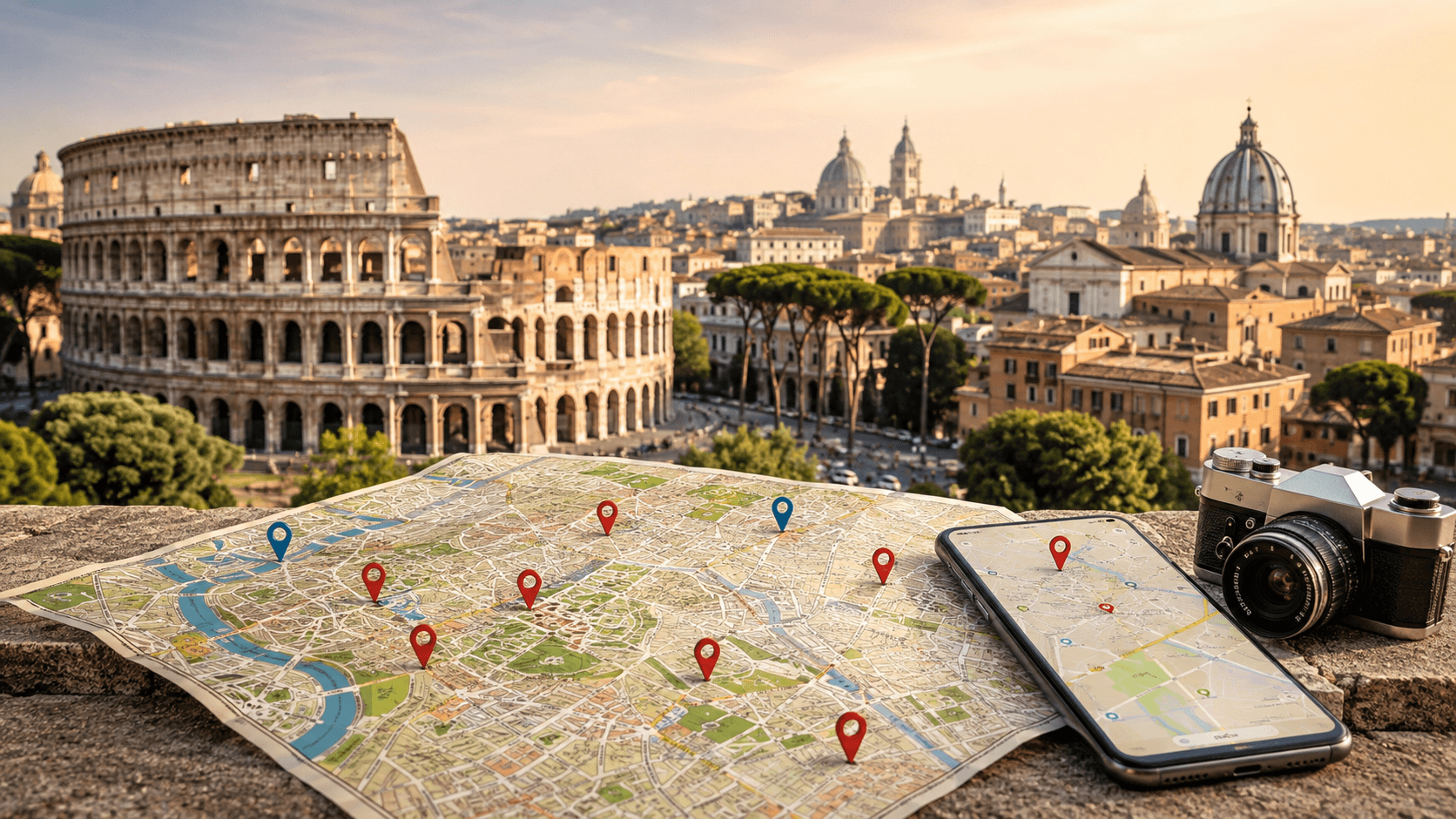
The heart of any trip to Rome lies in its ancient ruins and Renaissance art. A reliable Rome Interactive Travel Map helps you pin major spots like the Colosseum, the Pantheon, and the Vatican to see where they sit.
Visualizing these distances prevents classic planning blunders. For instance, booking a Vatican tour right before a stroll through the Roman Forum is a recipe for exhaustion. These two landmarks sit on opposite sides of the Tiber River and demand substantial travel time between them.
| Attraction | Location / District | Recommended Visit Time |
|---|---|---|
| Colosseum & Roman Forum | Piazza del Colosseo | Early morning (3 hours) |
| Vatican Museums | Vatican City | Pre-booked morning slot (4 hours) |
| The Pantheon | Piazza della Rotonda | Mid-afternoon (1 hour) |
- The Colosseum and Roman Forum: Arrive early in the morning to beat the midday heat and the thickest crowds.
- The Vatican Museums and St. Peter’s Basilica: Set aside a full morning and secure timed entry tickets well ahead of time.
- The Pantheon: Tucked inside the historic core, this ancient temple is easy to reach on foot from surrounding piazzas.
Smart Walking Routes to Save Time
Managing your hours in the city depends on how well you group your stops. By plotting your day on a Rome Interactive Travel Map, you can cluster sights by neighborhood to cut down on travel.
Walking is often the fastest way to get around the historic center. Subway lines are sparse because digging tunnels risks striking buried ancient ruins.
A classic two-kilometer stroll links the Spanish Steps, the Trevi Fountain, and Piazza Navona. This path serves up a high concentration of Baroque design and local gelato shops.
Tracking this path on your Rome Interactive Travel Map keeps you from bypassing smaller monuments hidden in plain sight. Scheduling your walk to match lunch hours lets you find local dining spots without wandering off course.
Uncovering Rome’s Best-Kept Secrets
Tucked behind the major monuments are quiet spots that paper maps usually skip. Adding these to your Rome Interactive Travel Map opens up layers of history far away from tourist hordes.
Look for the Aventine Keyhole. Looking through this brass keyhole reveals a perfectly framed view of St. Peter’s Dome down a garden path.
The Quartiere Coppede is another hidden pocket worth finding. This tiny neighborhood displays a whimsical mix of Art Nouveau, Gothic, and Baroque details. If you need a break from the cobblestones, head to the Villa Pamphili park to wander through its sprawling gardens.
Technical Features of a Superior Navigation Tool
A great digital map must do more than drop standard pins on a screen. It needs offline capability, live transit updates, and filters you can turn on and off.
Using a Rome Interactive Travel Map that works offline protects your mobile data. It also keeps you on course when you step inside thick stone churches where cell signals die.
- Offline GPS: Navigate without cellular data or pricey roaming plans.
- Custom Filters: Hide or show local restaurants, drinking fountains, or ruins with a single tap.
- Built-in Audio: Listen to historical details linked directly to your exact coordinates.
Simple Tips for Smooth Travel
Rome has thousands of free public drinking fountains called nasoni that flow with fresh spring water. Marking these fountains on your Rome Interactive Travel Map keeps you hydrated while saving money on bottled water.
Buses and trams are cheap, and you can now pay directly on board using contactless cards. If you prefer traditional paper tickets, buy them at local tobacco shops or metro stations before boarding.
- Mark public restrooms: Finding a public toilet in old quarters is tough without planned stops.
- Locate taxi stands: Standard rideshare apps mostly offer expensive luxury rides here, making white taxi ranks the best bet for normal fares.
- Spot local eateries: Skip the overpriced restaurants right next to monuments by walking three blocks away to find where locals eat.
Planning Your Roman Adventure
Untangling the historical layers of the city requires a solid plan. A Rome Interactive Travel Map helps you transition smoothly from crowded ruins to quiet neighborhood plazas.
Planning ahead saves time and helps you skip crowded bus routes. Getting your bearings early transforms a busy itinerary into a relaxed walk through antiquity.

Comments are closed